

How Much Does It Cost to Develop a Hardware Product?


(A Realistic Breakdown for Funded Startups)
Bringing a hardware product to market is not a line item—it’s a strategic investment.
For founders entering hardware, one of the first questions is: How much will this cost? The more important question is: What level of investment is required to do this right?
Hardware development is unforgiving. Underfunded projects don’t just slow down—they fail. Products get stuck in prototyping, break during manufacturing, or never achieve product-market fit.
This guide breaks down the real costs of developing a hardware product and what serious startups should expect when building for scale.
The Reality: Hardware Product Development Is Capital Intensive
Unlike software, hardware requires:
Physical materials and components
Tooling and manufacturing infrastructure
Iterative prototyping and testing
Regulatory compliance and certification
For startups targeting a market-ready, scalable product, total development costs typically range from:
$150,000 to $1M+
(Depending on complexity, category, and scale)
This is not excess—it’s what it takes to build a product that performs reliably, scales efficiently, and competes in the market.
Choosing the right development team is one of the most significant factors influencing overall cost and outcome. Large firms often deliver high-quality work but come with substantial overhead and, in some cases, equity expectations. On the other hand, hiring internally or working with solo practitioners may reduce upfront cost, but it often leads to longer development cycles, limited resources, and gaps in cross-disciplinary expertise.
1. Industrial Design Cost
(Defining the Product and User Experience)

Industrial Design is where your product becomes tangible. It defines usability, form, differentiation, and how the product communicates value. For hardware ventures, well-executed Industrial Design often delivers one of the highest returns on investment.
Typical Range: $20,000 – $100,000+This phase includes:
Intellectual property strategy
Regulatory pathway considerations
Market, product, and user research
Product and brand differentiation
Consumer appeal and perceived value
Ergonomics and usability design
Ideation and concept development
CMF (color, material, finish) strategy
Design for manufacturability alignment
The Cost of Getting It Wrong
Industrial Design reduces downstream cost and risk. Poor decisions early lead to:
Missed market opportunities
Lower valuation and marketability
Weak product differentiation
Reduced feasibility or poor functionality
Increased manufacturing complexity
Greater intellectual property risk
Expensive engineering revisions
Higher production costs
2. Product Engineering Cost
(Making the Product Work)

Product Engineering translates design into a functional, manufacturable system. High-quality engineering remains tightly integrated with design throughout the process to preserve intent, performance, and user experience.
Strong engineering reduces risk, improves reliability, and ensures scalability. Strategic planning begins early—incorporating divergent thinking, evaluating cost drivers, and aligning decisions with manufacturing and quality requirements.
Typical Range: $50,000 – $300,000+
This phase includes:
Mechanical and structural design
Electrical engineering and PCB development
Firmware and software integration
Component selection and system architecture
Tolerance analysis and performance validation
The Cost of Getting It Wrong
Engineering is where most cost overruns occur. Relying solely on manufacturers or inexperienced teams is a high-risk strategy. Rushing to production often leads to higher failure rates, reduced quality, intellectual property risks, and escalating costs—especially when:
Design and engineering are misaligned
Components are selected without a supply chain strategy
Systems are unnecessarily complex
3. Prototyping Cost
(Testing Before You Commit)

Prototyping validates decisions before they become expensive. Every dollar invested at this stage can save multiples in manufacturing—and drive greater success in the market.
A strategic, experienced team can plan prototyping efficiently, minimizing cost while maximizing insight and performance.
Typical Range: $10,000 – $100,000+
This phase includes:
Low-fidelity mockups
Proof-of-concept builds
Functional prototypes
Appearance models
Engineering Validation Testing (EVT)
Design Validation Testing (DVT)
Production Validation Testing (PVT)
Iterative refinement cycles
The Cost of Getting It Wrong
Poor-quality prototypes create false confidence. They can misrepresent production readiness and conceal critical flaws that only surface later—when changes are significantly more expensive.
Prototypes produced directly by manufacturers are often optimized for speed, not accuracy. As a result, they may fail to fully demonstrate functionality, masking defects and performance gaps.
Discovering these issues during production is often too late—or too costly—to correct.
Skipping or underfunding prototyping leads to:
Reduced quality and performance
Failed production runs
Delayed launches
Product recalls
Poor customer reception
Damage to brand reputation
4. Branding Cost
(Communicating Value and Driving Demand)

A product that works is not enough. If customers or investors don’t understand it, trust it, or desire it, they won’t buy—or invest.
Branding transforms a functional product into a market-ready business. It defines perception, drives differentiation, and builds long-term value.
Typical Range: $15,000 – $150,000+
This phase includes:
Trademarks and brand IP considerations
Naming and messaging development
Brand strategy and positioning
Visual identity systems (logo, typography, color)
Product storytelling and value communication
Packaging design and unboxing experience
Website and digital presence
Marketing assets (photo, video, content)
The Cost of Getting It Wrong
Branding is not decoration—it is a business multiplier. Strong brands are built early and integrated into product development—not retrofitted later. This ensures the product is clearly understood and positioned in the market, with every touchpoint reinforcing a cohesive message.
Startups that treat branding as an afterthought often face:
Mismatched product and brand perception
Weak differentiation in crowded markets
Slow customer understanding and adoption
Delayed trust and reduced credibility
Higher and less effective marketing spend
Price-based competition instead of value-based positioning
Costly rebranding efforts post-launch
5. Manufacturing Setup Costs
(Preparing for Production)

This is where most founders underestimate costs—and where the highest risks exist.
Manufacturing is not just execution; it’s strategy. Preparation and setup are often more critical than production itself.
Typical Range: $50,000 – $500,000+
This phase includes:
Vendor and supplier sourcing and vetting
Contract negotiation and pricing
Onboarding and training
Tooling and mold development
Production samples and iterative refinement
Manufacturing line setup
Quality control systems
Certifications (UL, FCC, FDA, CE, etc.)
The Cost of Getting It Wrong
Entering manufacturing unprepared—or relying on manufacturers to define the product—puts startups at a significant disadvantage. It limits control over cost, quality, and intellectual property, and often leads to compounding issues over time.
Without proper setup:
Unit costs increase
Quality becomes inconsistent
Production timelines slip
Control over manufacturing is reduced
Intellectual property ownership and protection are weakened
What Drives Cost Higher (or Lower)?
Key variables that impact total investment include:
Level of innovation and intellectual property development
Product complexity (mechanical, electrical, and system integration)
Regulatory requirements (medical, IoT, consumer electronics)
Production volume targets
Speed to market
Startups that attempt to cut costs early often pay significantly more later. Unlike software, hardware development is not inherently agile—it requires deliberate planning, validation, and disciplined execution at each stage.
Skipping or underinvesting in any phase introduces long-term risks that are often difficult—and sometimes impossible—to correct once decisions are locked in.
The Hidden Cost: Lack of Integration
The biggest cost driver isn’t design, engineering, or manufacturing—it’s misalignment between them.

When Industrial Design, Product Engineering, Branding, and Manufacturing are handled separately:
Work is duplicated
Decisions conflict
Timelines extend
Costs compound
The result is a fragmented product and an inefficient development process.
Early alignment is critical. Involving all disciplines from the outset ensures informed, collective decision-making—before costly commitments are locked in.
Working with an integrated team like Unbox Product Design addresses this directly. With a design-led approach to commercialization, every discipline operates in sync—reducing risk, improving efficiency, and delivering products built for real-world success.
How Funded Startups Approach This Differently
Well-funded startups don’t ask, “What’s the cheapest way to build this?”
They ask:
How do we reduce risk?
How do we build this right the first time?
How do we protect margins at scale?
They invest in:
Integrated development teams
Clear processes and documentation
Early manufacturing strategy
Because they understand: execution determines outcomes.
Build for Scale, Not Just Launch
A prototype is not a success. A shipped product is not scaled.
Real success is:
A product manufactured consistently
Strong margins at volume
A brand that drives demand
A system built to scale
That requires investment, discipline, and experience—not shortcuts.
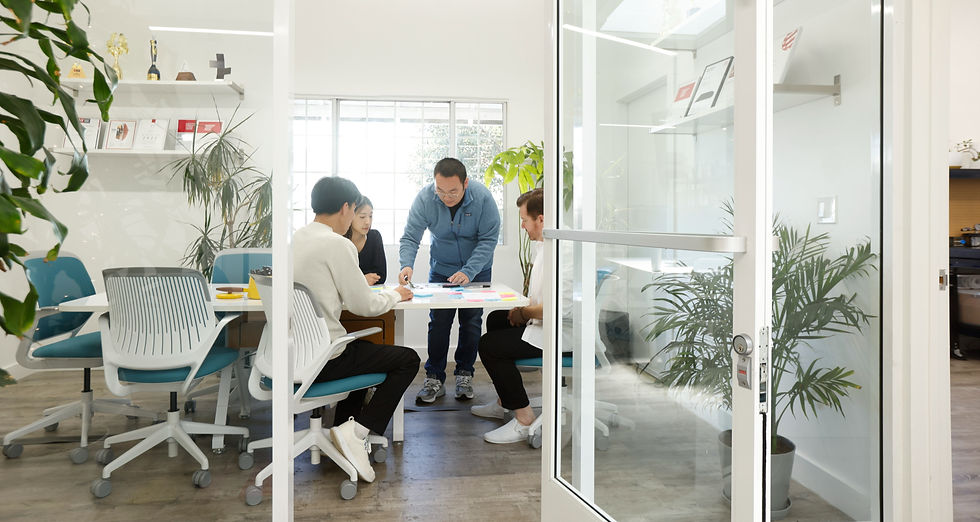
Work With the Right Partner
At Unbox Product Design, we partner with startups serious about building scalable, high-performance hardware products.
We provide:
Integrated Industrial Design, Product Engineering, Prototyping, and Branding
Structured development processes with a clear path to scale
Manufacturing-ready solutions that deliver quality and profitable margins
Defined scope, timelines, and deliverables
Our focus is simple: Reduce risk. Increase speed. Build products that succeed.
Start With Clarity
If you’re building a hardware product and want a realistic understanding of cost, timeline, and process, we can help.
Unbox Product Design is a design-led product innovation firm specializing in the commercialization of hardware products and accompanying brands.
We operate at the intersection of design, engineering, manufacturing, and strategy—helping companies turn ambitious ideas into scalable, market-ready solutions.
With over 50 years of collective experience, we combine strategic insight with high-level execution.
Schedule a discovery call to evaluate your product and define the path forward.


Comments