

How Venture-Backed Startups Develop Hardware Products


Inside the Product Development Process Behind Scalable Hardware Companies
Venture-backed hardware startups operate differently from most early-stage companies. They are expected to move fast, reduce risk, protect intellectual property, and build products capable of scaling into real businesses, not just prototypes.
Investors often use the saying “hardware is hard”. They understand that, compared to software, hardware development is capital-intensive and operationally unforgiving.
A weak process creates delays, manufacturing failures, missed market opportunities, and rising costs. That’s why funded startups rely on experienced product development teams with structured systems, cross-disciplinary expertise, and a clear path from idea to production.
At Unbox Product Design, we work with startups navigating exactly this challenge: transforming ambitious ideas into manufacturable, market-ready products through integrated Industrial Design, Product Engineering, Branding, and Manufacturing strategy.
This article breaks down how venture-backed teams typically approach hardware product development and why process matters just as much as the idea itself.
1. Design Research and Product Strategy
(Defining the Opportunity Before Development Begins)
Professional hardware development begins long before CAD models or prototypes. Venture-backed companies should thoroughly validate the opportunity itself at an early stage.
This phase focuses on:
Market and competitive analysis
User and behavioral research
Product positioning and differentiation
Intellectual property research
IP infringement mitigation
Technical feasibility assessment
Regulatory pathway evaluation
Manufacturing considerations
The objective is clarity.
VC-funded startups cannot afford to spend hundreds of thousands of dollars building products without understanding the market, the customer, and the operational realities behind commercialization.
This stage often defines:
Product direction
Market opportunity gaps
Development cost
Investor confidence
Go-to-market strategy
Long-term scalability
The strongest startups validate assumptions early before expensive engineering decisions are made.
2. Industrial Design and Concept Development
(Turning Strategy Into a Product Blueprint)
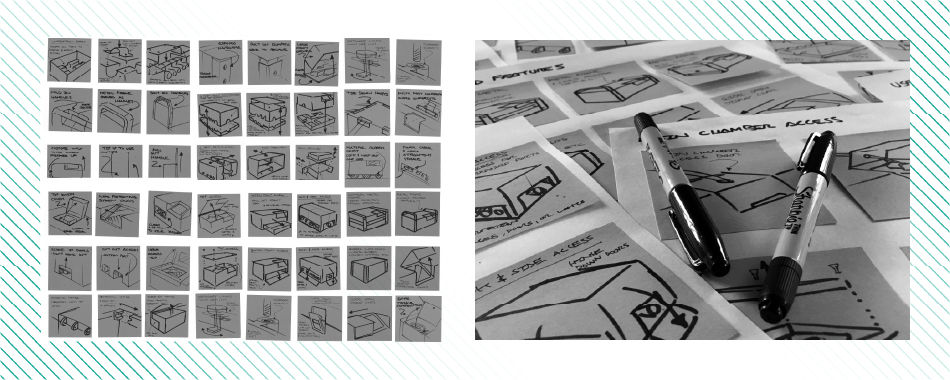
Once the opportunity is validated, Industrial Design begins shaping the product itself.
This is where venture-backed startups focus:
User experience and usability
Product architecture
Ergonomics and interaction
Marketability and product form
CMF strategy (color, material, finish)
Design for Manufacturing (DFM) alignment
Product differentiation and brand perception
For professional product teams, Industrial Design is not decoration; it is a business strategy translated into physical form.
This phase directly influences:
Consumer perception
Product desirability
Manufacturing complexity
Production cost
Brand positioning
Intellectual property opportunities
Experienced teams understand that strong Industrial Design often creates the foundation for stronger margins, investor appeal, and market differentiation
3. Product Engineering and System Development
(Making the Product Functional and Manufacturable)
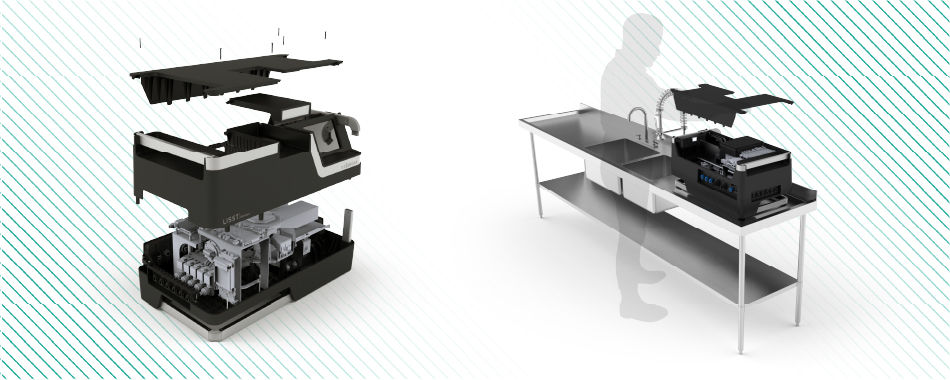
After concept direction is established, Product Engineering builds the blueprint into a functioning system.
This phase typically includes:
Mechanical engineering
Tolerance analysis
PCB and electrical engineering
Firmware development
System architecture
Component selection
Structural, stress, and thermal validation
Design refinement for manufacturability
This is where venture-backed startups separate serious development from prototype experimentation.
Professional engineering teams evaluate:
Scalability
Supply chain stability
Manufacturing repeatability
Reliability and quality control
Cost optimization
At this stage, alignment between Industrial Design and Product Engineering becomes critical. Misalignment creates downstream cost overruns, engineering revisions, tooling complications, and manufacturing instability.
The most effective hardware startups operate with tightly integrated teams where design and engineering evolve together, not separately.
4. Prototype development phases
(Reducing Risk Through Iteration)

Experienced product teams do not build a single prototype and move to production. They progress through structured prototype phases designed to reduce technical and manufacturing risk.
Low-Fidelity Prototypes
Quick mockups used to evaluate:
Product size and proportion
User interaction
Early ergonomic feedback
General concept direction
Design Validation Testing (DVT)
DVT prototypes focus on:
Cosmetic refinement
User experience
Material and finish quality
Regulatory preparation
Manufacturing alignment
Proof-of-Concept Prototypes
Focused on validating:
Core functionality
Technical feasibility
Critical engineering assumptions
Engineering Validation Testing (EVT)
EVT prototypes test:
Electronics performance
Mechanical systems
Firmware stability
Integrated functionality
Production Validation Testing (PVT)
PVT confirms:
Production readiness
Manufacturing repeatability
Assembly workflows
Supply chain coordination
Quality consistency
Each phase exists to uncover problems early before they become expensive production failures.
5. Usability Testing and User Validation
(Ensuring the Product Works in the Real World)

Venture-backed startups prioritize usability because real-world behavior determines product success.
At each stage of prototyping, the product will undergo testing through the following audiences:
Internal team members
Founders and stakeholders
Family, friends, and community
Focus groups and controlled interviews
Market testing and pilot production runs
Usability testing helps teams evaluate:
Ease of use
Learning curves
User expectations
Product intuitiveness
Failure points
Emotional response and perception
This process often reveals issues that engineering alone cannot identify.
The most successful hardware companies build products around human behavior—not just technical capability.
Testing early with real users reduces:
Product-market misalignment
Negative reviews
Customer support burden
Return rates
Market rejection
Professional product teams treat usability testing as a strategic investment, not an optional step.
6. Manufacturing Reviews and DFM
(Preparing the Product for Scale)

A prototype is not a production-ready product.
Before manufacturing begins, venture-backed startups conduct detailed manufacturing reviews to ensure the product can scale efficiently and profitably.
This stage includes:
Tooling reviews
Assembly optimization
Manufacturing process selection
Supply chain analysis
Vendor qualification
Cost reduction opportunities
Tolerance and quality review
Quality control protocols
Regulatory preparation
This is where Design for Manufacturing (DFM) becomes essential.
Without proper DFM:
Unit costs rise
Quality becomes inconsistent
Production slows
Tooling becomes expensive
Margins shrink
Professional hardware teams understand that manufacturing strategy must be integrated early, not treated as a final step.
7. Pilot Production Runs
(Validating Production Before Scale)

Before full manufacturing begins, startups typically execute pilot production runs.
These smaller-scale production batches validate:
Manufacturing consistency
Assembly workflows
Quality control systems
Packaging and logistics
Production timelines
Supplier coordination
Pilot runs identify production weaknesses before inventory is scaled. Skipping this phase often results in:
Product defects
Production delays
Costly recalls
Customer dissatisfaction
Damaged investor confidence
Professional teams use pilot production to refine systems, stabilize quality, and prepare for scalable growth.
Why Venture-Backed Teams Choose Integrated Product Development Firms

The biggest cost driver isn’t design, engineering, or manufacturing—it’s misalignment between them.
VC-funded startups operate under pressure:
Faster timelines
Investor accountability
Larger capital exposure
Higher expectations for execution
This is why many venture-backed companies work with integrated development firms instead of fragmented freelancers or disconnected vendors.
At Unbox Product Design, we provide:
Industrial Design
Product Engineering
Branding
Prototyping
Manufacturing strategy
Commercialization support
All within a unified, design-led process built for scalability.
This integrated approach helps startups:
Reduce development risk
Accelerate timelines
Protect intellectual property
Improve manufacturing readiness
Build stronger, more differentiated products
Most importantly, it creates alignment across every stage of development from idea to production.
Build Beyond the Prototype
The goal of hardware development is not simply to create a prototype.
The goal is to build a scalable business around a manufacturable product that customers trust and investors believe in.
That requires:
Strategic planning
Structured development phases
Cross-disciplinary collaboration
Manufacturing readiness
Experienced execution
At Unbox Product Design, we help venture-backed startups navigate the full journey from concept to commercialization.
If you’re building a hardware product and want to develop it with the structure, strategy, and execution expected by professional investors and scalable businesses, schedule a discovery call with our team.


Comments